Description
The Master of Contrast: Aglaonema Bicolor
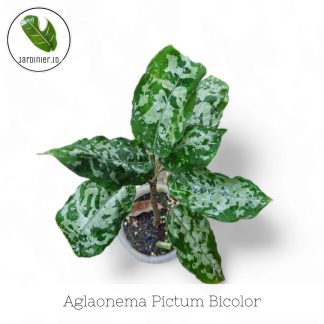
For collectors who prefer sophisticated textures over loud colors, the Aglaonema Bicolor is a perfect addition. This variety is celebrated for its clear-cut “inner and outer” color zones. While many variegated plants have random splashing, the Bicolor often keeps its darkest green pigments at the leaf margins, while the interior is flooded with a frosty, marbled white. At Jardinier.id, we select specimens with the sharpest color definition to ensure maximum visual impact.
The leaves of the Aglaonema Bicolor are elegantly narrow and lanceolate, tapering to a sharp point. The deep green edges are not just a color—they act as a frame that makes the inner variegation appear even brighter, almost as if the leaf is glowing from within. This species is particularly prized for its “clean” look, making it a favorite for modern minimalist interiors or as a high-contrast companion to solid green aroids.
Beyond its beauty, the Bicolor is one of the more resilient rare Aglaonemas. It maintains a sturdy, upright clumping habit and doesn’t require a moss pole, making it an ideal choice for tabletops or office desks. Because it is a botanical-style variety rather than a delicate laboratory hybrid, it tends to be more forgiving of slight environmental shifts, provided its basic humidity and light needs are met.
At Jardinier.id, we ensure that every Aglaonema Bicolor is well-established with a healthy root system. This plant is a steady grower that fills out its pot beautifully, creating a dense, two-toned crown of foliage that remains vibrant year-round.
Professional Care Guide
| Light | Thrives in medium to bright indirect light. The bold white centers need quality light to stay vibrant, but direct sun should be avoided to prevent leaf scorch. |
| Watering | Water when the top 50% of the soil feels dry. Like most Aglaonemas, the Bicolor prefers a well-draining mix and does not like to sit in soggy substrate. |
| Humidity | Adaptable to average home humidity, but will show faster growth and larger leaves in humidity levels above 50%. |